





Basmati rice is not just another grain on your pantry shelf, but a centuries-old staple known for its long, slender grains, delightful aroma, and light taste. Whether in domestic kitchens or high-end restaurants, basmati rice remains a popular food across the globe.
At Inari Rice, we believe that good rice can elevate even the simplest meals. In this guide, you will discover the basmati rice benefits, along with its different varieties and easy cooking techniques—so you can enjoy a perfect dining experience every time.
Health Benefits of Basmati Rice
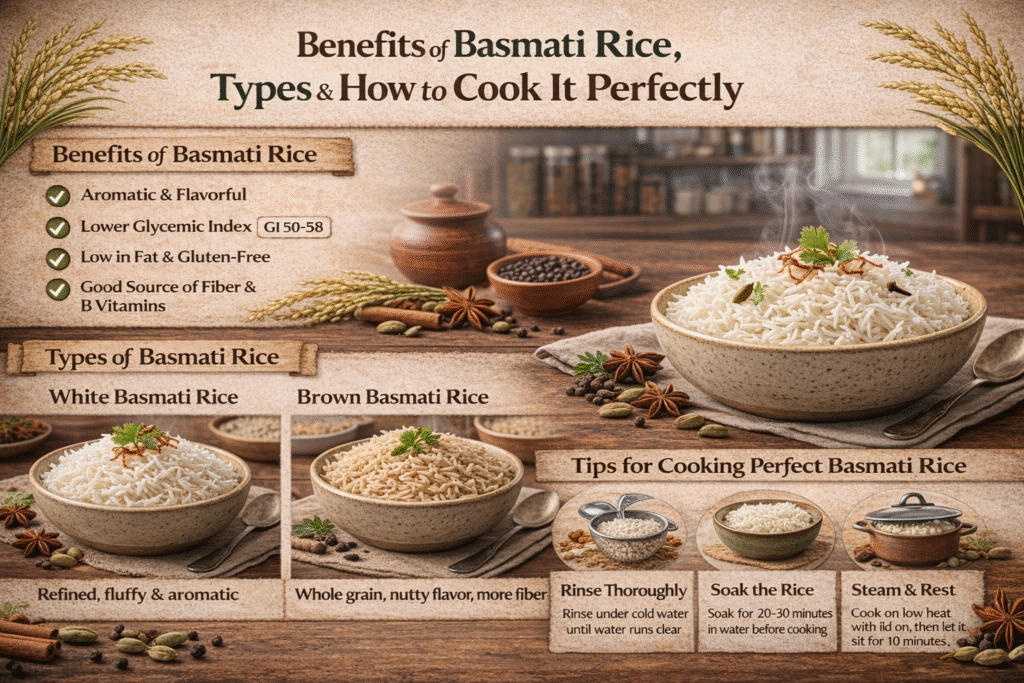
Basmati rice does not just taste good, but when consumed as a component of a balanced diet, it provides great nutrition.
Low Glycemic Index
The glycemic index of basmati is lower than many other types of white rice, therefore, it is a smarter choice to keep the blood sugar levels stable.
Naturally Gluten-Free
Gluten-free people will love basmati rice to a teat: it is the perfect addition to a gluten-free diet.
Supports Digestive Health
The fact that it is easy to digest due to its light texture makes it easy to consume especially when it comes to having recovery diets.
Source of Essential Nutrients
Basmati is a source of carbohydrates to generate energy and minute traces of protein, iron, and B vitamins.
You are not only spending the money on taste when purchasing high-end grains such as inari rice, but also on health.
Popular Varieties of Basmati Rice
Basmati rice is not all within the same. The following are the most widespread ones:
Traditional Basmati
Naturally aged to boost the aroma and taste: will be good in biryanis and in festivals.
Steam Basmati
Partly steamed to firm the nutrients and firmly. Great for everyday meals.
Sella (Parboiled) Basmati
Extra strong and golden in color and good in very big gatherings or catering.
Brown Basmati
An all-wheat vegan diet full in nutrients and fiber.
At inari rice, purity, length and fragrance of the varieties of rice are carefully acquired and processed so that you can achieve restaurant quality outcomes at home.
Simple Cooking Guide for Perfect Basmati Rice
There are several basic steps to the preparation of cooking basmati rice:
Step-by-Step Method
- Flow a lot of water until the water cleans up (get rid of the starchiness).
- Allow to absorb 20-30 minutes to achieve full expansion of grains.
- Take 1:2 ratio 1 cup rice: 2 cups water.
- Boeil and then simmer in a covered dish of 10-12 minutes.
- Switch off heat and allow it to cool down by the course of 5 minutes.
- Turn lightly with fork then serve.
Please Note: When cooking, grains are maintained separately and fluffy by a few drops of oil or ghee.
Premium inari rice can be used to make pulao, fried rice and a simple comfort bowl because the texture and aroma will be the same and every time.
Why Choose Inari Rice for Your Kitchen?
It does matter because of the brand of rice. The following is the distinction of inari rice:
Oil free long-grain basmati carefully selected.
- Hygienic processing and packaging.
- Naturally aged so as to have good aroma.
- Well-suited in homes as well as food establishments.
Whether it is a picnic during the day or a feast, inari rice is authentic and delicious enough to land it on your dish.
Final Thoughts
Basmati rice is still popular among one of the most favorite grains in the world as it is admired by its aroma, nutrition and usability. Knowing the benefits of foods, kinds and cooking techniques will enable you to make the most out of every meal.
When you want to choose something that is regularly of high quality and has amazing taste, place your trust in inari rice and you will get to feel the real flavor of the finest basmati.