





Rice is not only food but also memory, heritage and their connection. Rice has been the central issue of celebrations, meals and rituals across generations. This plain grain brings into life tales of labor, family, and ethnical pride on kitchen tables and huge celebrations.
At Inari rice, we think that each grain narrates something. And now, let us take a look at how rice has helped to formulate the traditions of people all over the world and as to why the rice still has so much significance in our lives.
Rice: A Symbol of Life and Prosperity
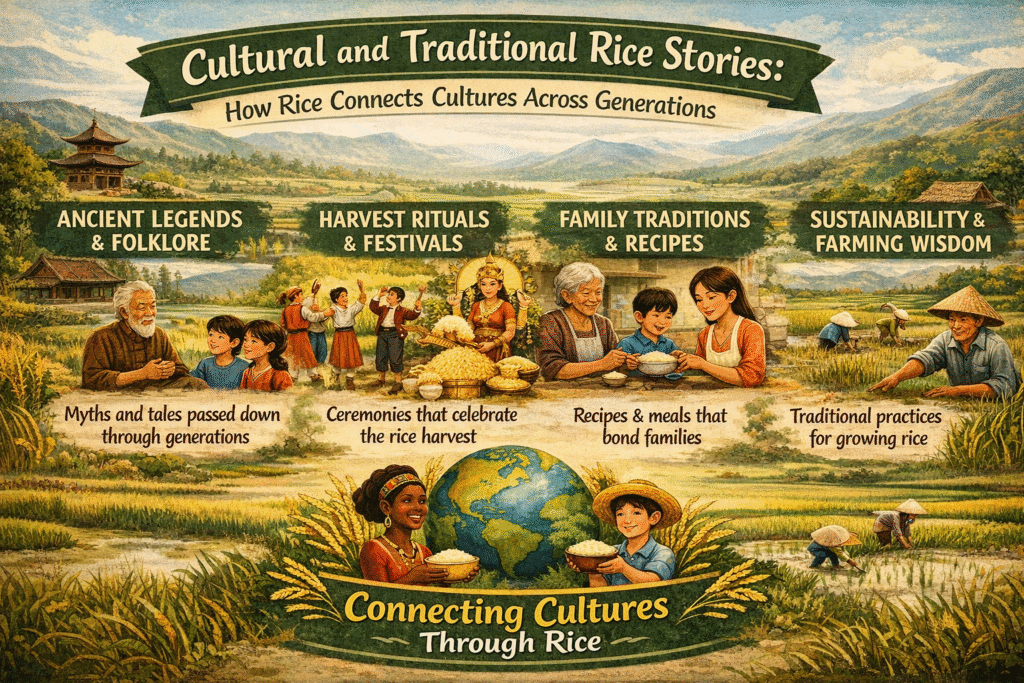
Rice has been a symbol of thankfulness and plenty since times immemorial. Rice food is usually offered to guests by many cultures and newlywed people are sprinkled with rice in order to have a prosperous and fruitful marriage. Rice pits are the celebrations of harvest seasons by farmers who are grateful to nature and thankful to its richness.
Rice is the first solid food in millions of houses that shares it to children, a mute testimony to the fact that this food is sometimes taken as the first steps in life.
Preparation of rice is still a daily rite even today in most families. Rinsing the grains, letting them soak and waiting until the kitchen is filled with that familiar smell is something that has been handed down with fondness one generation to the other.
Families who use quality grains such as inari rice are not only cooking food but they are also keeping a tradition.
Stories from the Kitchen: Where Traditions Begin
Each family has its rice legend.
Others recall how the grandparents used to fluff rice raising it so well with the fork and then serving. Some of them remember celebratory food, when the main topic was rice cooked with spices and aromas. To most individuals, rice can be associated with childhood as well as the current cooking.
Rice continues to unite people even in high-paced life conditions. No matter it is a routine lunch or a memorable party, eating rice together at the table puts us in a time of closeness that could not be imitated with the usage of technologies.
Such high quality brands as inari rice recognise such traditions by providing consistent quality, so that families can replicate the true flavors at home.
Rice in Festivals and Ceremonies.
Culturally, rice is a very influential aspect of culture. It is consumed during prayers, served at welcoming rituals and when other significant milestones such as births, marriage, and harvest months are being celebrated.
The planting and harvesting of rice have music, dance, and narration in the farming communities. These scenes help one remember that rice is no longer a cultivated crop but a revered one.
Rice is a gift of harmony, sustenance and appreciation in rural village to city dwellers.
From Field to Plate: Respecting the Journey
Nobody knows all the effort of farmers that cultivate crops across seasons behind every bowl of rice. All that we eat on our tables through their work is fresh and alive rice.
The efficiency of processing methods has been enhanced today though traditional values continue to drive quality oriented brands. Inari rice, is sourced carefully and kept well packed in clean packaging to maintain the natural aroma and long-grain texture that is rather popular among the people.
Knowing about this trip will give each meal even greater significance.
Rice in Today’s World: Tradition Meets Modern Living
Even though the types of cooking change with time, rice has never gone out of favor. Contemporary kitchens contain a mixture of traditional and modern tastes, which proves that rice fits well with the modern-day tastes.
Health conscious consumers love rice because it is very easy to digest and provides energy. Time-starved families use it as speedy and fulfilling food. Chefs play around with rice in innovative manners – but there are no losses in its cultural history.
In making good choices such as inari rice, people can have the best of both in terms of preserving the traditional and the convenient.
Why Rice Stories Still Matter
Rice helps us to relax in the busy world. It unites the families, generations, and retains cultural identity. Each grain has a history with it, the history of farmers, families and festivals.
Still being simple or turned into a sophisticated meal, rice remains a connection between the past and the present.
And by serving inari rice, you are not offering food only, but heritage, comfort and care.
Final Thoughts
The cultural and traditional rice tales show the extent to which the simple grain has permeated the lives of humans. Rice has been a meal, symbol, and food of life since time immemorial.
The length of these stories is one meal at a time by making good rice and following traditional ways of cooking.
Let inari rice include your trip and experience getting the traditional flavor and an old tradition itself on your table.