





Many consumers become confused about 1121 Basmati Rice vs. Traditional Long Grain when selecting the best long rain basmati rice. While both are favored for their fragrance, consistency, and flavor, they vary in their length of grain, their culinary application, cost of grain, and best uses. You can prepare biryani at home, cook pulao in the restaurant style, or buy the best rice for your meals. Understanding the difference between these two distinct grades of premium rice can help you choose the right one.
India is a renowned producer of quality basmati rice, and amongst the various types of basmati, 1121 rice and traditional basmati are the most preferred. In this guide, we will be detailed by comparing each of the two kinds of rice extensively, from which you can decide which one you’d prefer to cook and eat according to how you like it.
1121 Long Grain Basmati Rice is what?
One of the most popular modern-day varieties of basmati rice on the market is 1121 basmati rice. It is renowned for its very long grain and outstanding extension post-cooking. Grains lose stickiness, become fluffy, look nice, and are perfect for making biryani and special cuisines.
The premiumized look of 1121 rice is one of its top factors of popularity. Once cooked, the grains almost can double their length to provide a showy, upscale restaurant appearance.
Detailed and specified all key features of 1121 basmati rice.
- Extra-long grain size
- Extremely tender, succulent meat (after cooking)
- Strong aroma
- Soft and fluffy feel
- Suited for making pulao and biryani.
- A popular room in hotels and restaurants.A room that is popular in hotels and restaurants.
Due to its characteristics, 1121 rice is popularly exported and is one of the best varieties for high quality cooking.
Explain what Traditional Long Grain Basmati Rice is.
Traditional Long Grain Basmati Rice are some of the original basmati varieties cultivated for years in India. These rice grains are aromatic naturally and famous for their true distinctive flavor and old fashioned heritage.
Traditional basmati is not like the 1121 variety; it concentrates more on flavor and aroma than on the extremely long grain appearance. There is still a significant number of people who like traditional basmati due to its classic texture and natural aroma.
Key Features of Traditional Basmati Rice
- Rich authentic aroma
- Naturally flavorful
- The medium/long grain appearance is on the medium to long side.
- Body after cooking – soft and fluffy.After cooking – soft and fluffy.
- It is suitable to eat every day.
- Traditional Indian taste
The balanced taste and cost of traditional basmati rice makes it popular in the homes of the Indian people as an everyday choice for cooking.
Major Differences Between 1121 and Traditional Basmati Rice
To understand which rice is better, it is important to compare them side by side.
1. Grain Length
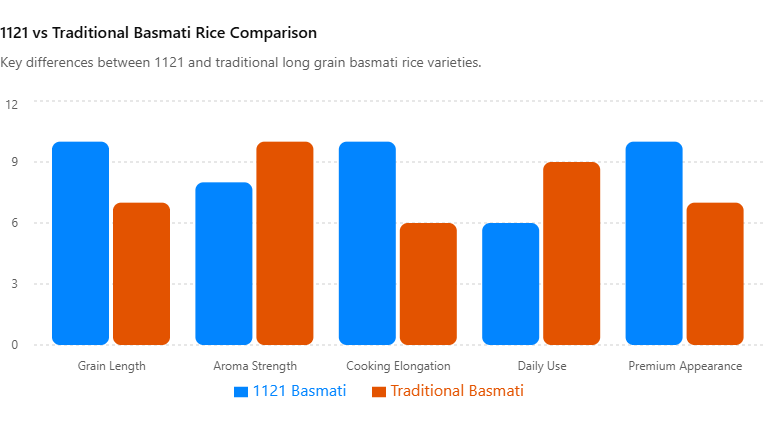
Compared to traditional basmati rice, 1121 rice stands out for its extra-long grains, especially after cooking.
The basmati rice from traditional varieties has a moderately long grain, and the grains have a more authentic feel.
2. Aroma and Flavor
Older basmati rice is an authentic, fragrant rice, with a more natural smell. Traditional “old” rice varieties are believed to impart a deeper flavor to rice than 1121 rice.
1121 rice will also have a good smell, however its other characteristics are appreciated more: appearance and texture.
3. Cooking Result
With separate grains and fluffy rice, 1121 rice does a wonderful job. Ideal for large, elaborate dishes such as dum biryani as well as for special celebrations.
Rice cooked using traditional methods is softer and is preferred for preparing normal household foods.
4. Pricing
The quality of the 1121 basmati rice is higher and its demand is higher in export, so the price is higher.
Traditional basmati rice is not only costlier than the conventional basmati rice but also less popular in daily cooking.
5. Best Usage
- 1121 Rice: Biryani, pulao, special occasions, restaurants
- Traditional Rice: day-to-day food, khichdi, steamed rice, traditional recipes
For biryanis, what is the better Rice?
When it comes to creating lunch-style dishes at restaurants, 1121 Basmati Rice will generally be a more suitable choice. It produces extra-long grains with good fluffiness, and looks good in the dish.
1121 rice has a tendency to cook apart from the other rice, and it soaks up flavors well, making it a popular option among professional chefs and restaurants.
Yet, traditional basmati rice can be used to come up with a tasty basmati biryani with superior aromatic. Traditional rice is the acception of some home cooks due to its authentic taste.
For what reason is 1121 Rice favored the world over?
This demand for 1121 Basmati Rice has grown exponentially in last few years. This rice is preferred in export market due to:
- Attractive appearance
- Long grain size
- Premium quality
- Better shelf appeal
- Excellent cooking results
Many international restaurants serve long, medium, and short grain rice in Middle Eastern and Indian dishes because customers often associate long grain rice with a premium dining experience.
Why traditional Basmati rice still has loyal buyers
Despite being 1121 rice obviously predominant in the premium market, traditional basmati rice has its followers. Even those who appreciate a ‘real India flavour’ will choose traditional varieties.
Irish Rice is also suitable for:
- Everyday family meals
- Homemade recipes
- Comfort food
- Traditional Indian dishes
Below are some suggestions to choose the best Long Grain Basmati Rice.
These are some important points to consider while purchasing basmati rice:
Check Grain Length
The higher the length of the grains, the higher the quality.
Look for Aging
When left to age, rice will cook easier and have a better flavour and texture.
Verify Aroma
The smell of the good rice basmati should be natural, even before cooking.
Buy Trusted Brands
Select quality assured suppliers who have a good reputation.
Match Rice to Your Recipe
Opt for 1121 rice for biryani, festive items and everyday cooking; traditional basmati is perfect for daily consumption.
The winner is decided at the end of the game.
It’s dependent on your cooking requirements and tastes.
- Premium appearance
- Extra-long grains
- Restaurant-style biryani
- Fluffy texture
If you are still under the impression that you need to choose rice in kilos, then 1121 Basmati Rice would be a better choice.
- Authentic aroma
- Traditional flavor
- Daily cooking rice
- Balanced affordability
If this is the case, it might be better to opt for Traditional Best Long Grain Basmati Rice.
The two varieties are all good; it will depend on the intended purpose for the rice as to what variety to choose. From 1121 to traditional basmati, choosing high-quality rice always improves the taste and overall experience of your meals.
Basmati rice is the perfect choice for long grain rice, and it’s essential to comprehend the difference between these two to make a wise and fulfilling choice.