





When you make biryani or pulao, rice is the thing. It is what makes the dish turn out well. The rice grains should be long and separate easily. They should smell good. Be fluffy, not soft and sticky.
That is where aged basmati rice really makes a difference.
Fresh basmati rice can be good. It often has too much moisture. This means you have to be careful when you cook it. Aged basmati rice is stored for a while after it is harvested. Then it is. Sold. While it is stored the rice has some qualities that people like to use for special meals. These qualities are that the rice is firmer, the grains separate better and it smells better. It looks lighter when it is cooked.
At Inari Rice we have Diamond XXXL and Platinum XXXL rice. This rice is for people who want basmati rice for biryani, pulao, special meals and everyday meals that deserve good rice.
Why is aged basmati rice better for biryani?
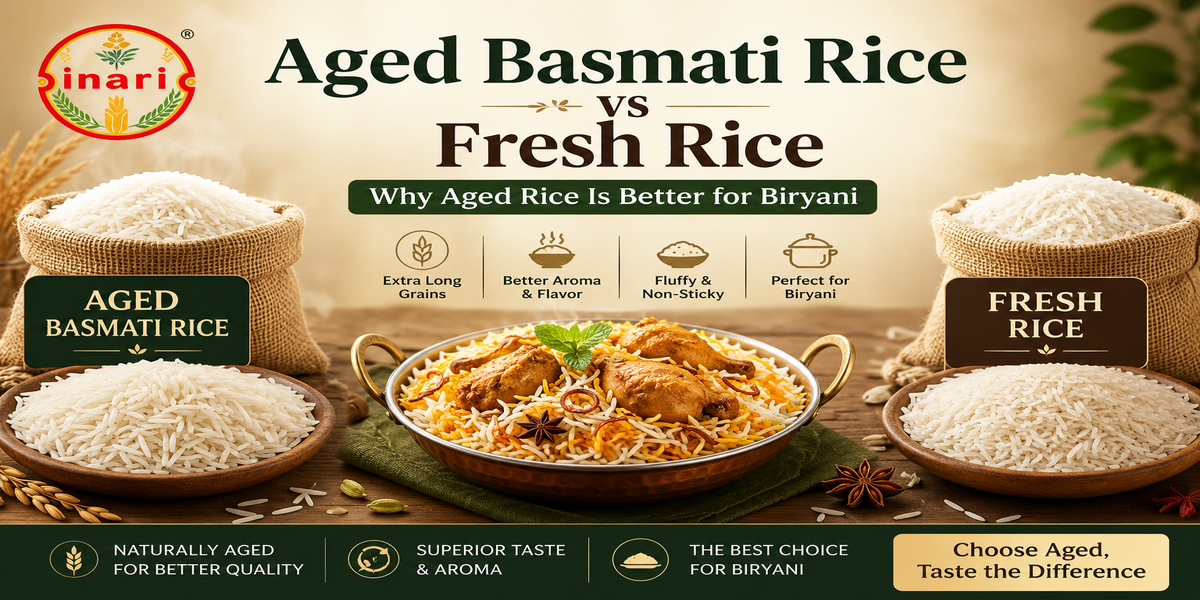
Aged basmati rice is better for biryani because it has lower moisture content, cooks into longer and fluffier grains, absorbs spices evenly, and remains separate after cooking. Most premium biryanis use rice aged for 12–24 months to achieve the best texture and aroma.
| Feature | Aged Basmati Rice | Fresh Basmati Rice |
|---|---|---|
| Moisture | Lower | Higher |
| Grain Texture | Fluffy | Softer |
| Grain Separation | Excellent | Moderate |
| Best Use | Biryani, Pulao | Daily meals |
| Water Required | Less | More |
What Is Aged Basmati Rice?
Basmati rice that is aged is basmati rice that has been kept in a place after it is harvested before it is sold to people. The reason for aging basmati rice is that basmati rice gets to dry out a bit. Basmati rice that is aged is really older basmati rice. Aging basmati rice lets the basmati rice grains get older in a way.
As basmati rice gets older, the amount of moisture in it gets less and less. This helps the grains of basmati rice cook evenly and not stick together after they are cooked. Good basmati rice that is aged is liked for its smell, its long grains and the way it gets bigger when it is cooked.
Not all basmati rice is the same when it is cooked. The quality of the grain, the type of basmati rice and how it is processed. How old it is makes all the difference. That is why people often choose premium basmati rice for dishes where the basmati rice needs to look nice and taste good.
Aged Basmati Rice vs Fresh Rice
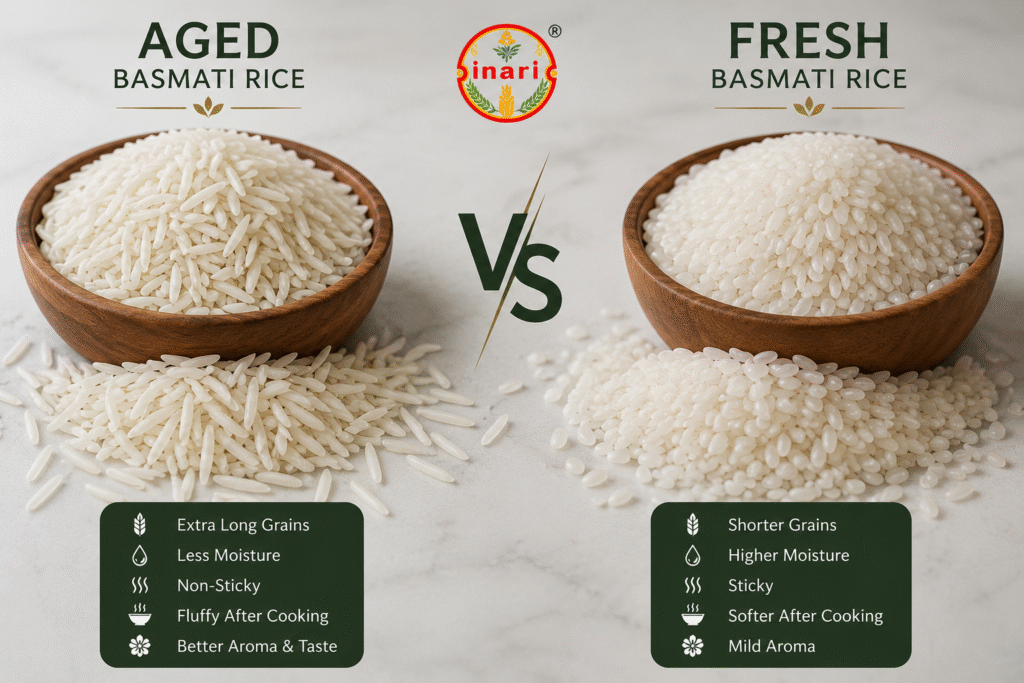
| Feature | Aged Basmati Rice | Fresh Basmati Rice |
|---|---|---|
| Storage after harvest | Stored for a period before sale | Sold closer to harvest |
| Moisture level | Usually lower after aging | Usually higher |
| Grain behaviour after cooking | More likely to stay separate | Can become softer if overcooked |
| Best suited for | Biryani, pulao, festive meals | Daily meals and softer rice dishes |
| Aroma | Often more developed | Can be milder |
| Cooking focus | Fluffy, separate grains | Requires more careful water control |
The main difference between basmati rice and fresh basmati rice is how the basmati rice grains behave when you cook them.
Fresh basmati rice has water in it naturally. This means fresh basmati rice can become soft and sticky if you do not add the amount of water or cook it for the right time. You can use basmati rice for the meals you have every day but it may not give you the kind of separate and long grains you want for biryani.
Aged basmati rice is usually preferred for:
- Biryani
- Pulao
- Fried rice
- Jeera rice
- Party meals
- Wedding-style rice dishes
- Meals where presentation matters
Fresh rice can be suitable for:
- Simple daily meals
- Soft rice dishes
- Khichdi-style preparations
- Recipes where very separate grains are not the main goal
Why Aged Rice Is Better for Biryani
Biryani needs rice that can handle flavor and steam and all that without falling. If the rice gets sticky or breaks easily or gets too soft, the biryani can feel heavy when the masala is really good.
basmati rice is popular for making biryani because it helps create the kind of people like
Long, separate grains
The grains stay more distinct after cooking. This gives biryani its classic layered appearance instead of a clumped texture.
Better aroma
Basmati rice has a smell. When rice gets older, it smells better. This smell is great when you open a pot of biryani.
Fluffy texture
If you cook basmati rice with the amount of water it gets light and fluffy. It soaks up flavors. Does not get mushy.
Stronger grain structure
Older rice grains keep their shape well when you soak, boil or cook them.
Better presentation
When you have family or guests the rice looks nice. Long separate grains of rice make the dish look good.
Benefits of Choosing Aged Basmati Rice
People usually choose basmati rice because of the way it cooks and tastes.
1. Better grain separation
The biggest advantage is the non-sticky result. Properly cooked aged rice gives you individual grains instead of a dense mass of rice.
2. Ideal for special dishes
Basmati rice that is aged is really good for making things, like biryani and pulao and fried rice. basmati rice also looks very nice on your plate when you serve it.You can use basmati rice for other special meals too.
3. Pleasant natural aroma
Aged basmati rice has a natural smell that is very inviting. It does not need any flavor to smell good.
4. Good expansion after cooking
Basmati rice grains get longer when you cook them. This makes the rice look nicer and makes each serving feel bigger.
5. Versatile for Indian and global recipes
Aged basmati rice is not just, for biryani. You can use it to make curries, rice bowls, kebab platters and many other types of dishes including steamed aged basmati rice.
How to Identify Good Aged Basmati Rice
Not every packet that uses the word “premium” is actually premium. Before buying aged basmati rice, check the details instead of trusting the front label alone.
Look for these qualities:
- Long and slender grains
- A clean, natural basmati aroma
- Low broken-grain content
- Consistent grain size
- Clear product information
- Reliable packaging
- A brand that explains the rice type honestly
- Product reviews from real buyers
Also consider your cooking need. A daily-use rice may be enough for regular meals. For biryani, pulao, celebrations, or gifting, choose a premium basmati rice with longer grains and stronger cooking performance.
Shop Inari Aged Basmati Rice
| Product | Rice type | Best use | Product page |
|---|---|---|---|
| Inari Diamond XXXL | Premium aged long-grain basmati rice | Biryani, pulao, family meals | Shop Diamond XXXL |
| Inari Platinum XXXL | Ultra-premium aged extra-long basmati rice | Premium biryani, celebrations, dum pulao | Shop Platinum XXXL |
Inari Rice has good basmati rice for people who like a nice smell long grains and rice that cooks well.
Our Inari Rice aged basmati rice is great, for cooking at home special meals and dishes where Inari Rice should be the part.
Inari Diamond XXXL Premium Basmati Rice
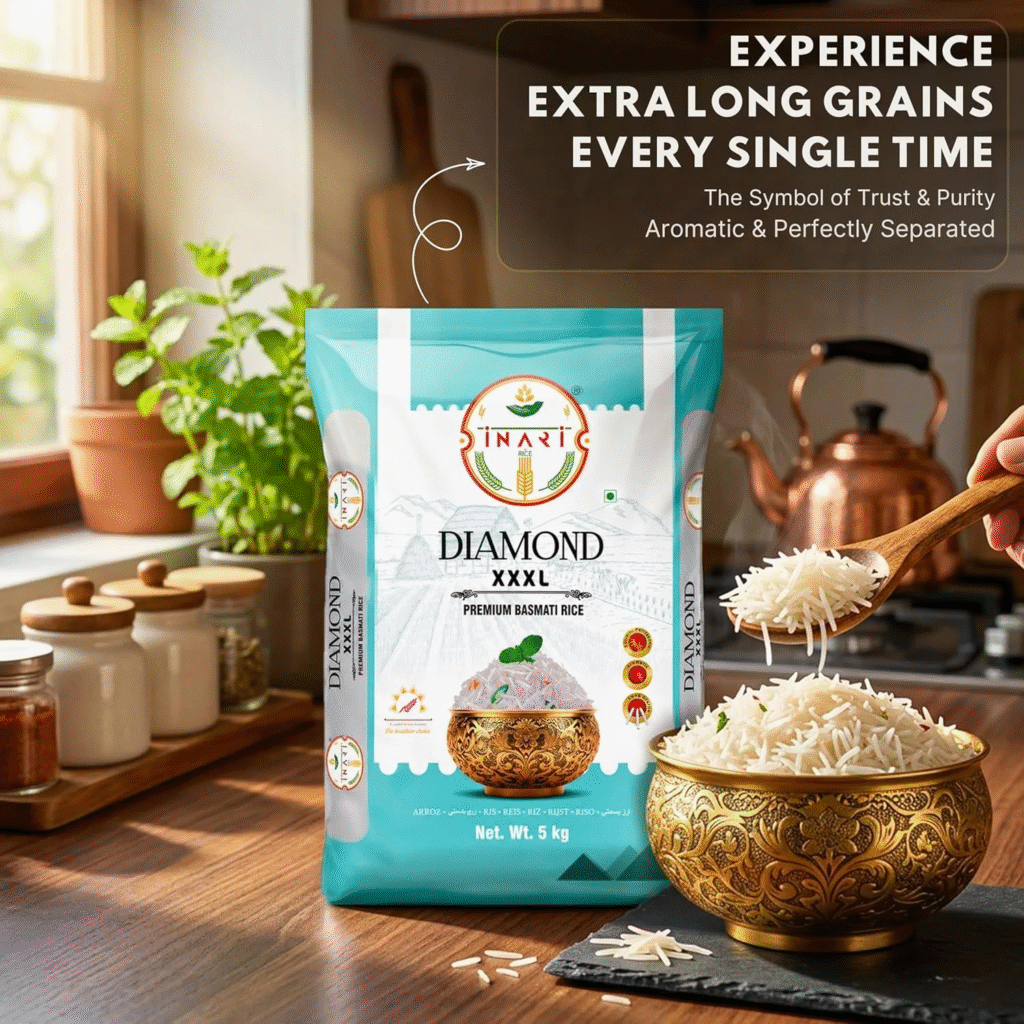
Inari Diamond XXXL is a good type of rice for people who like their rice to be extra long and fluffy. This is great for making biryani, pulao and for cooking every day.
Inari Diamond XXXL is a choice when you want your rice to look nice after it is cooked but you also want to be able to use it for normal meals, with your family.
Best for:
- Biryani
- Pulao
- Jeera rice
- Family dinners
- Festival meals
Inari Diamond XXXL Premium Basmati Rice
Inari Platinum XXXL Ultra Premium Basmati Rice
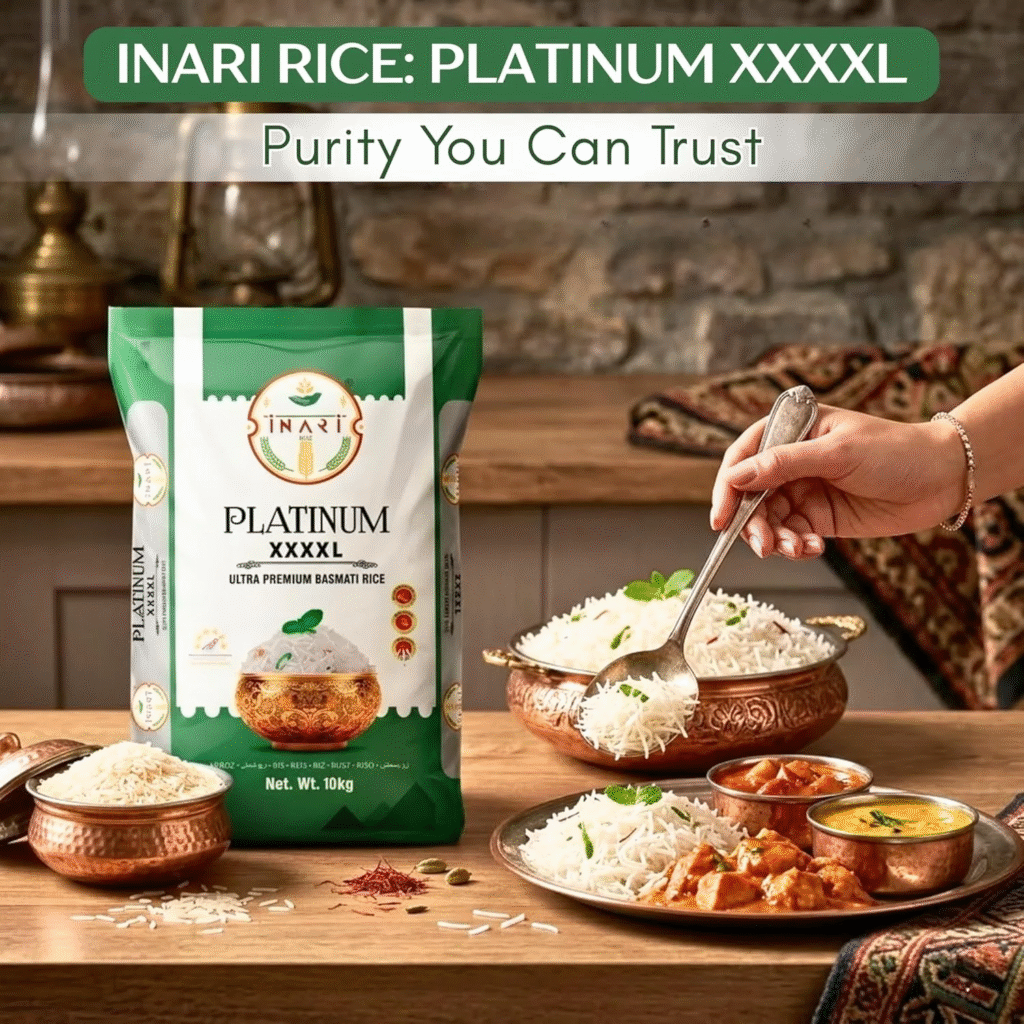
Platinum XXXL is made for people who want the basmati rice. The long and thin grains of Inari Platinum XXXL and the way it smells make Inari Platinum XXXL really good for making biryani, pulao and other dishes where you want it to look nice.
You should choose Inari Platinum XXXL when you need rice for your guests for parties or when you want to have a meal at home that is, like what you get in a restaurant.
Best for:
- Premium biryani
- Special occasions
- Dum pulao
- Dinner parties
- Gifting and festive cooking
Inari Platinum XXXL Ultra Premium Basmati Rice
How to Cook Aged Basmati Rice
Good rice still needs correct cooking. Even premium aged basmati can become soft or sticky if it is overcooked.
Use this simple method for separate, fluffy grains.
Ingredients
- 1 cup aged basmati rice
- 1.5 to 2 cups water, depending on the cooking method
- Salt, if required
- 1 teaspoon ghee or oil, optional
Method
- To cook rice, you need to rinse the rice two or three times until the water is mostly clear. Rice needs to be rinsed like this to get rid of any stuff.
- Soak the rice for 20 to 30 minutes. This helps the rice grains cook evenly so the rice is not hard or soft in some places.
- After the rice has soaked the soaking water we do not need this water anymore.
- Now we need to add water, salt and if you like, some ghee or oil to the rice.
- Cook the rice on medium heat. We want the water to be absorbed by the rice and the rice grains to be tender.
- When the rice is cooked, rest the rice for 5 to 10 minutes and keep the lid on the rice.
- Finally use a fork to fluff the rice before serving the rice.
When you are making biryani you should cook the rice. Only cook the biryani rice about 70 percent of the way. Then you can layer the rice with the masala and finish cooking the biryani on dum. This way the biryani will be really good.
Frequently Asked Questions
Is aged basmati rice better than fresh basmati rice?
When it comes to biryani, pulao and other dishes that need grains people usually like to use aged basmati rice. The reason is that basmati rice cooks really well. It becomes fluffy. Does not stick together when you cook it the right way. This makes basmati rice a great choice, for biryani and pulao.
Is aged basmati rice good for daily cooking?
Aged basmati rice is good for meals. This is especially true if you like rice that smells nice and has grains. For use you can choose the Inari range that fits your budget and the way you cook.
Does aged basmati rice need soaking?
It is an idea to soak aged basmati rice. This helps the grains cook evenly. They become longer. You do not need to soak it for a time; around 20 to 30 minutes is enough.
Which Inari rice is best for biryani?
If you want to make good biryani you can use Inari Diamond XXXL and Inari Platinum XXXL. These are options because they are basmati rice with long grains.
Where can I buy aged basmati rice online?
You can buy basmati rice online from Inari Rice. They have options to choose from so you can pick the one that is best, for your meals and your budget.
Choose Rice That Makes the Meal Better
Aged basmati rice is not about the length of the grains. It is actually about having control when you cook it. It smells really good and you can be sure that your biryani or pulao will look great when you serve it.
If you want your rice to be fluffy and smell nice for your meal, you should try Inari Diamond XXXL and Inari Platinum XXXL basmati rice. These aged basmati rice options will give you the kind of rice you want.