



Rice is a household food in millions of homes and not any rice is produced in equal measure. Whenever deciding on the type of rice to eat between the basmati rice and the normal white rice, it does not just come down to taste, but your health, nutrition, and even your lifestyle.
In this one-on-one comparison, we deconstruct on the differences and why the premium quality basmati, particularly that offered by Inari Rice, should give better advantages than regular white rice, and even other brands who advertise their rice under the label gold, platinum, or silver basmati rice.
What is Basmati Rice?
Basmati is a long-grain fragrant rice, which is culturally grown in India and other neighboring areas. Basmati rice is generally regarded as a premium type of rice characterized by its scent, fluffy texture and narrow grains.
Key Features of Basmati Rice:
- Long, slender grains
- Distinct aroma
- Food is non-sticky post-cooking.
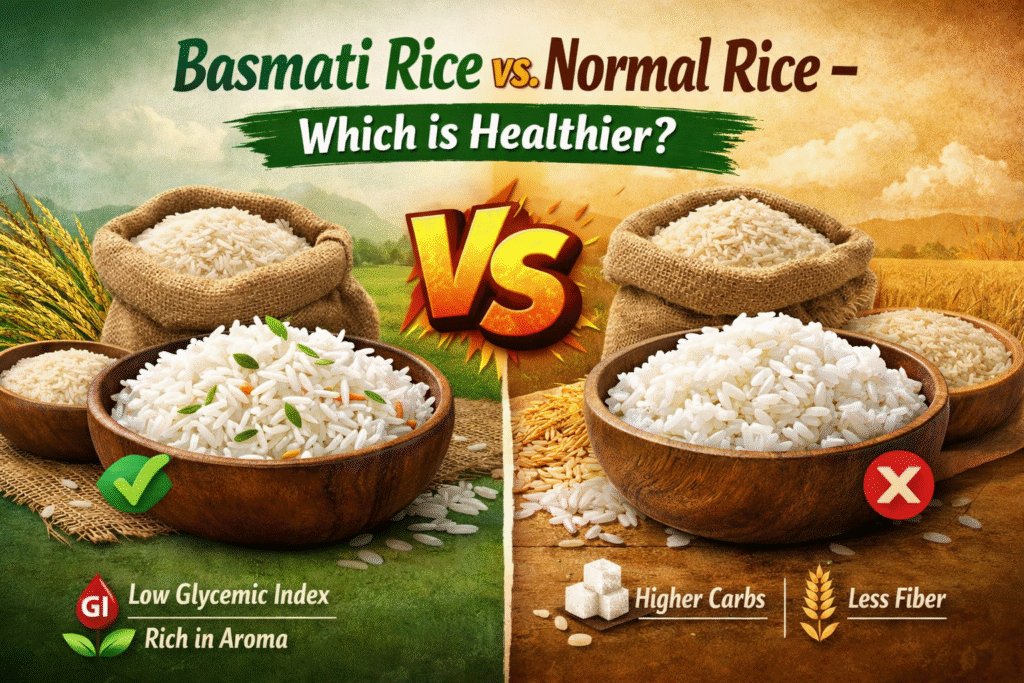
- Reduced GI than regular rice.
Inari Rice goes further and provides this premium experience by providing uniform grain length, better aging and specific processing methods.
What is the Normal White Rice?
Normal white rice is polished rice where the husks, bran and the germ have been removed. It is easily accessible and the cost is less, although it does not have the original features that basmati rice does.
Key Features of White Rice:
- Shorter or medium grain.
- Sticky upon cooking.
- Neutral flavor
- Higher glycemic index
Although white rice is convenient, it sometimes leaves a lot to be desired in regard to nutrient value and flavor.
Nutritional Comparison: Basmati vs White Rice
In matters related to health, the disparities are huge.
1. Glycemic Index (GI)
The GI of basmati rice is lower than that of regular white rice, and it implies that it is more likely to provide energy over time and even retains the level of blood sugar.
The GI of white rice, however, is higher, provoking sudden rises in sugar.
Winner: Basmati Rice
2. Digestion & Weight Management
Basmati rice is less dense and easier to digest. Its design enables it to stay separated once cooked to minimize its weight.
White rice may also be heavier, which is why it can lead to overeating because of its sticky nature.
Winner: Basmati Rice
3. Nutritional Value
Although both varieties lose nutrients during the polishing process, basmati rice has slightly a higher nutritional value and is usually aged, becoming easier to digest and tastier.
This is further reinforced by premium brands such as Inari Rice that are subject to strict control on quality and grain choice.
Winner: Basmati Rice
Taste & Cooking Experience
Taste is where basmati rice truly shines.
- Basmati rice presents a depth of aroma and slimy texture, thus tasting perfect in biryani, pulao and fancy meals.
- White rice is simple and tends to stick together due to which it is not so interesting to cook it elaborately.
Inari Rice also sees to it that all the grains are cooked evenly to provide you a restaurant like experience at home.
Basmati Rice Grades: Gold, Platinum, Silver – What Do They Mean?
Basmati rice is available under various grades, including gold, platinum, and silver brands. These labels normally denote the quality of grain length, aging, and processing.
Common Industry Understanding:
- Silver: Low quality basmati.
- Gold: Mid-range quality and with improved grain length.
- Platinum: Fine category that is longer grains and is aging.
But such labels tend to be marketed and would not be necessarily consistent across the brands.
Why Inari Rice Outperforms Gold, Platinum, and Silver Brands
Other companies are applying labels and Inari Rice talks about real quality.
1. Superior Grain Selection
Inari Rice chooses the best among long grains and the grains are uniform and excellent as compared to normal grading systems.
2. Advanced Aging Process
On the contrary to a lot of other so-called gold or platinum brands, Inari Rice is prepared with the best aging practices to get a better aroma, taste and cooking properties.
3. Consistent Quality Control
Lots of competitors find it hard to remain consistent. Inari Rice ensures quality control, such that each pack has the same quality experience.
4. Better Cooking Results
Grains are also long, individual, and fluffy, performing even better than most competitor basmati brands in the high-end segment.
5. Value Beyond Labels
Inari Rice does not offer silver, gold or platinum tags; instead, it provides you with the true quality of premium that you can feel, smell and taste.
Health Benefits of Choosing Inari Basmati Rice
In frying inari rice you are not only frying basmati you are also frying a better life.
Benefits Include:
- Improved glycosylated hemoglobin levels.
- Easier digestion
- Taste the best and do no harm.
This is quite suitable to families, health-conscious people, and those who are interested in a healthier substitute to the normal rice.
Which Rice Should You Choose?
White rice can be an expedient choice in case your paramount requirement is cheapness only. However, in terms of health, taste and quality, basmati rice is evidently the winner.
Not every brand of basmati is the same.
Final Verdict:
In terms of Health: Basmati Rice.
In terms of taste: Basmati Rice prevails.
In terms of Quality: Inari Rice dominates the market.
Conclusion
The Basmati vs white rice debate can be easily resolved based on health, taste, and the overall quality. Basmati rice has a distinct range of benefits, including a reduced glycemic index or better cooking outcomes.
However, it is not less important to select the right brand than to select the right kind of rice. Most of the competitors will advertise gold, platinum, or silver category, whereas Inari Rice will be offering real premium quality with no labels.
Inari Rice is the smart choice in modern kitchens, given that it outshines others in terms of health, flavor and consistency making it the best basmati rice.